C:\ARCHIVE\B_003_BERTH\case_study.txt
Berth
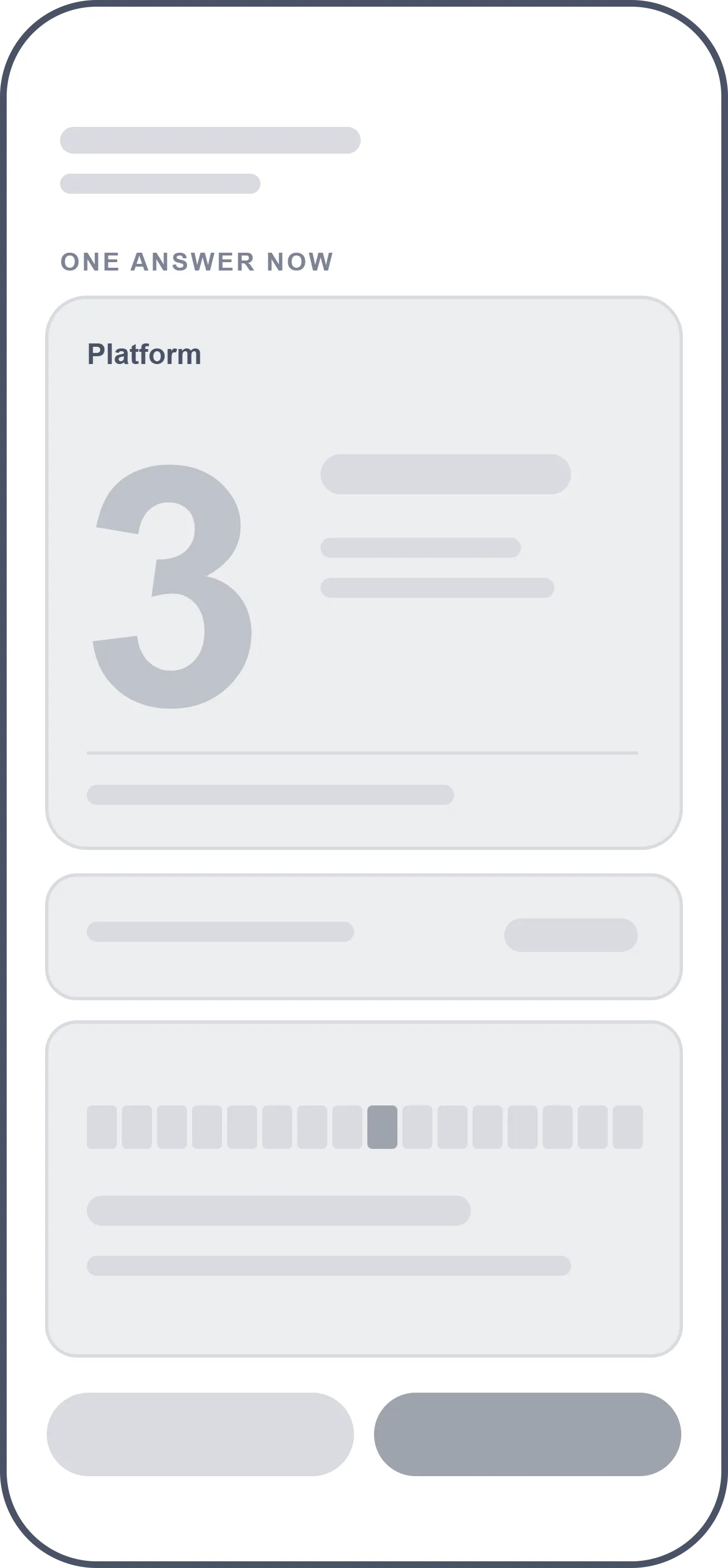
The one answer you need right now: where to stand, and when to wake.
Berth is a companion for long-distance train travellers in India who get on or off at a busy intermediate station, often at night, with luggage, a child or older family.
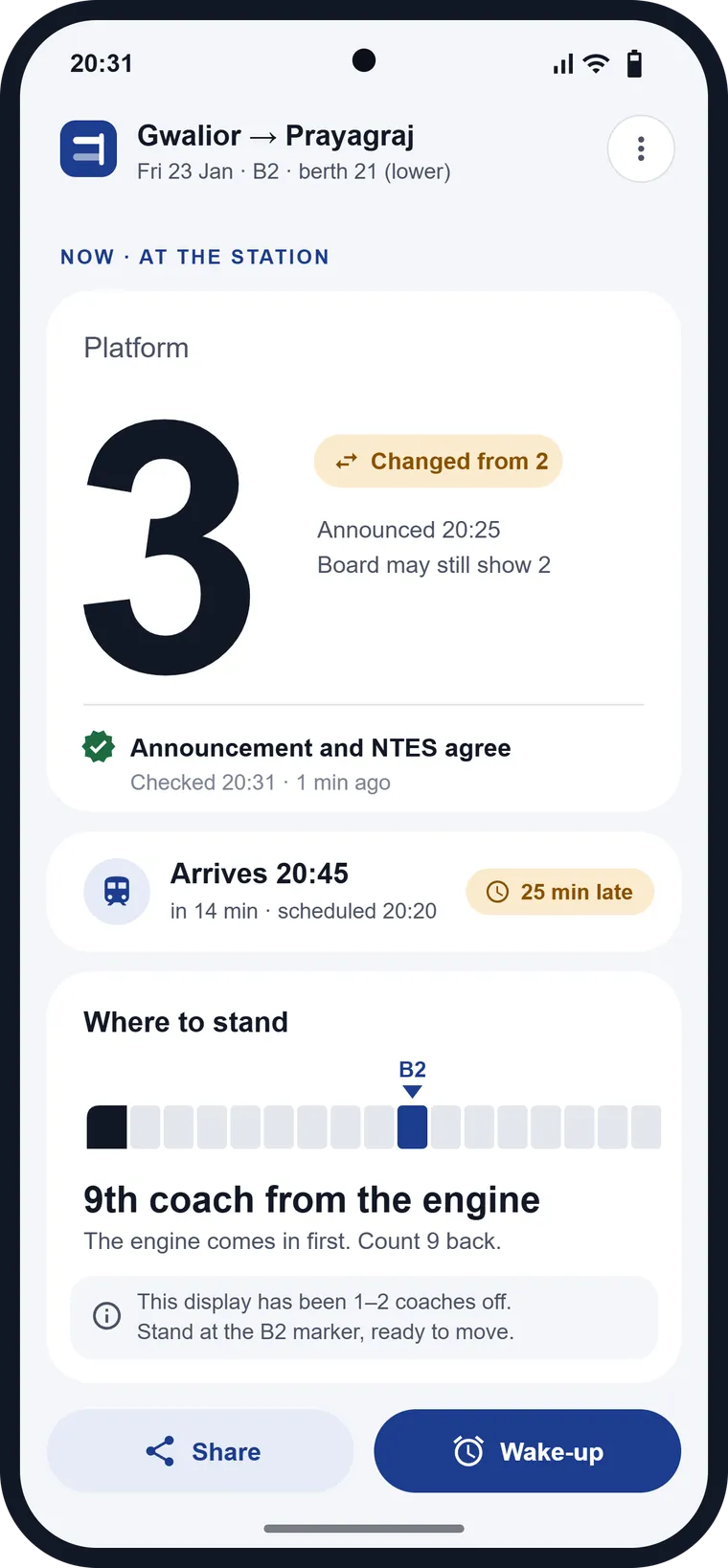
Simulated study data: I framed the problem, planned the study and did the analysis; the responses were simulated with AI from that plan.
01TL;DR
Briefed as an on-board companion. The pain was at both ends of the trip.
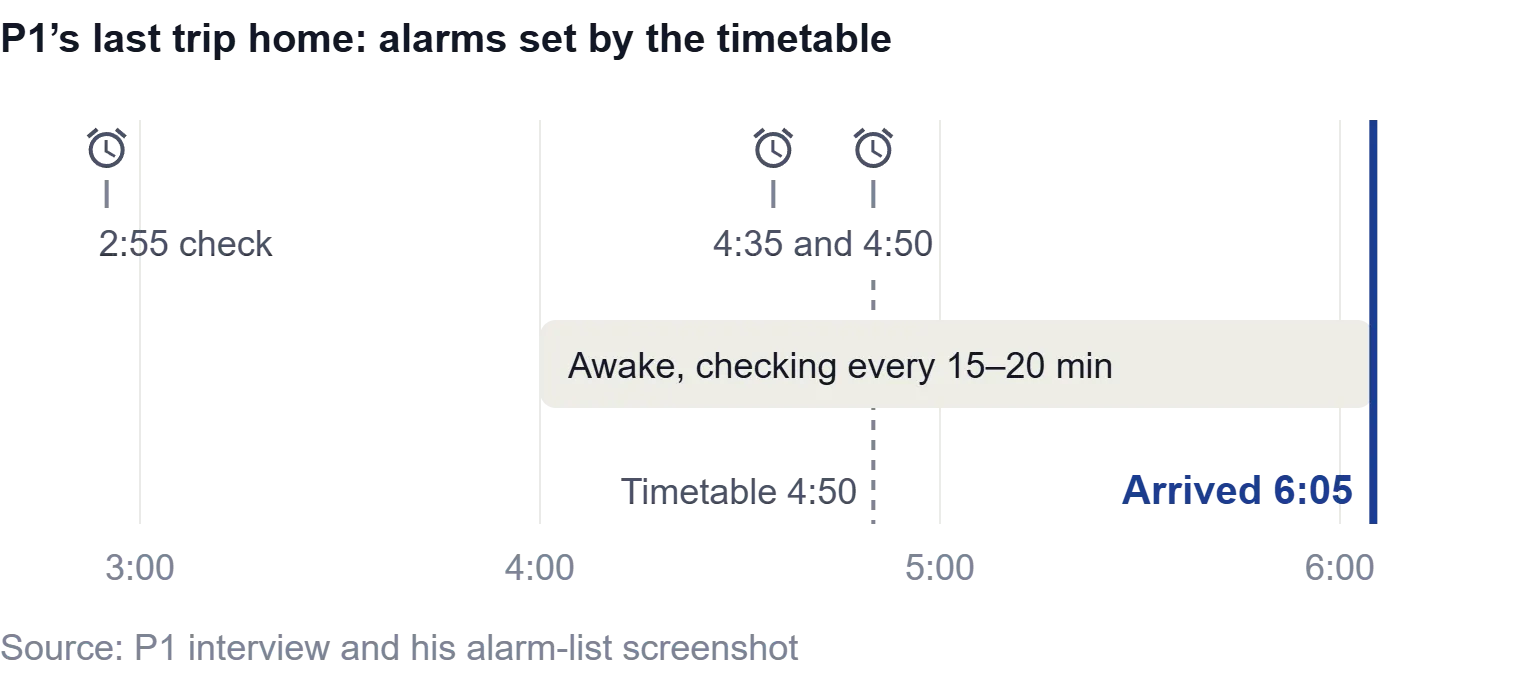
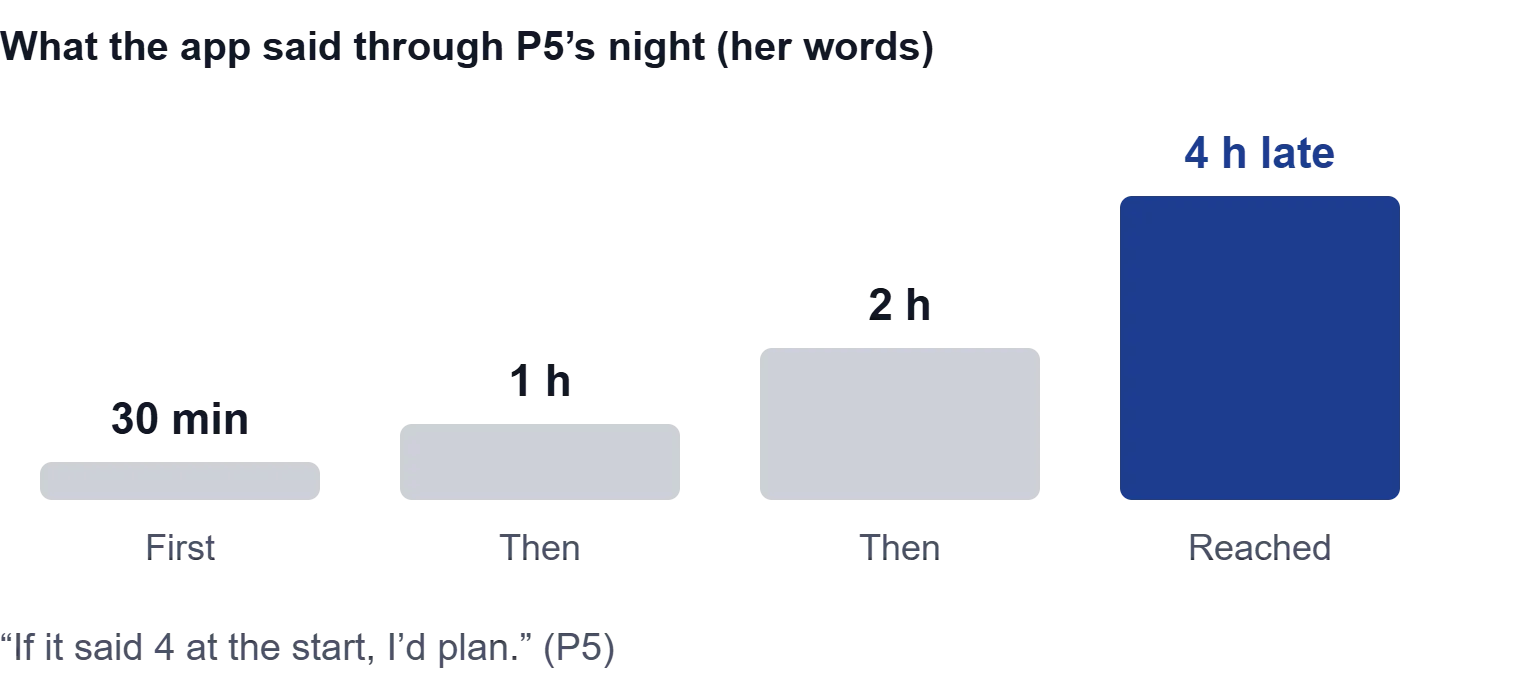
On the platform, travellers don’t know where their coach stops. On the approach to a pre-dawn stop, alarms follow the timetable while the train doesn’t.
Planned a mixed-methods study: a survey (n = 116), 8 interviews with stress lines, 2 hours of station observation and a 5-person diary. Then coded and analysed every file.
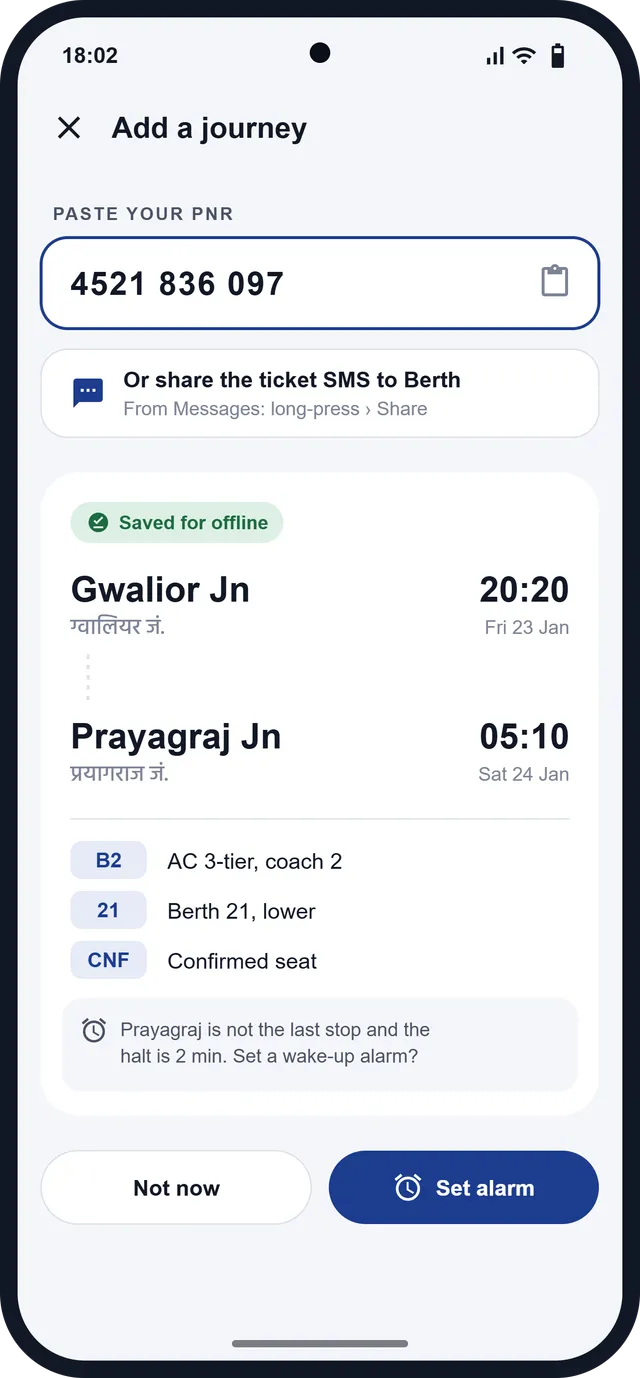
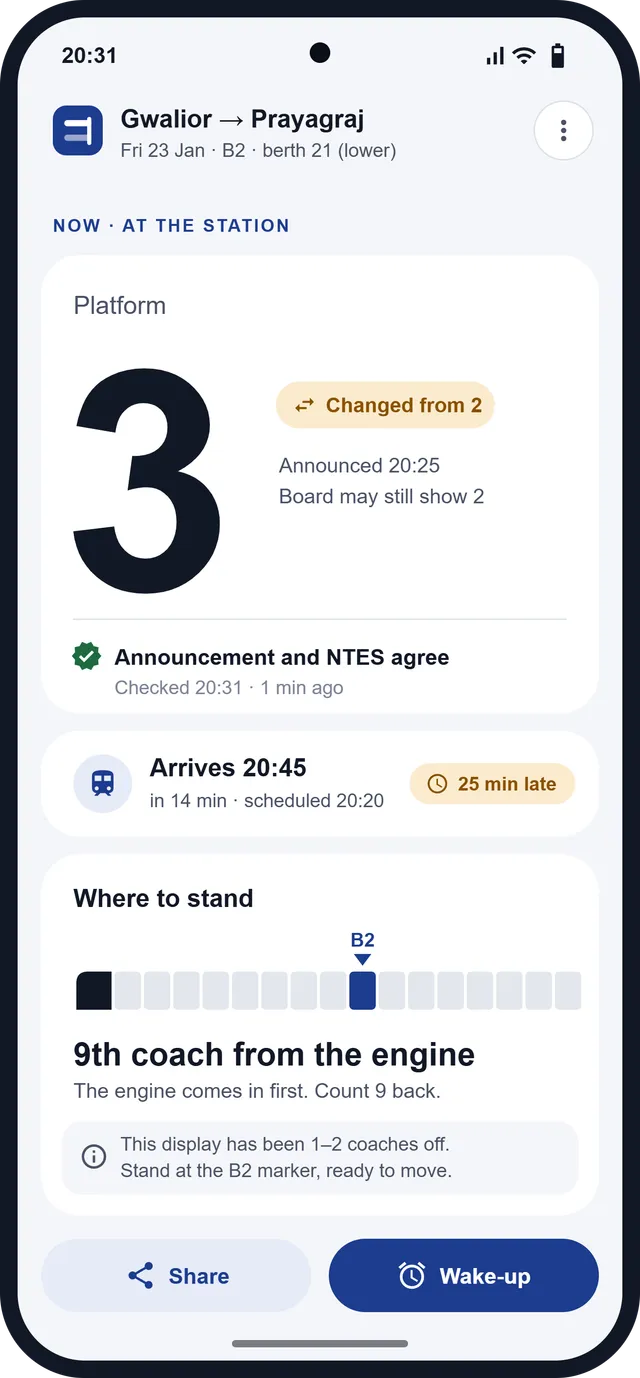
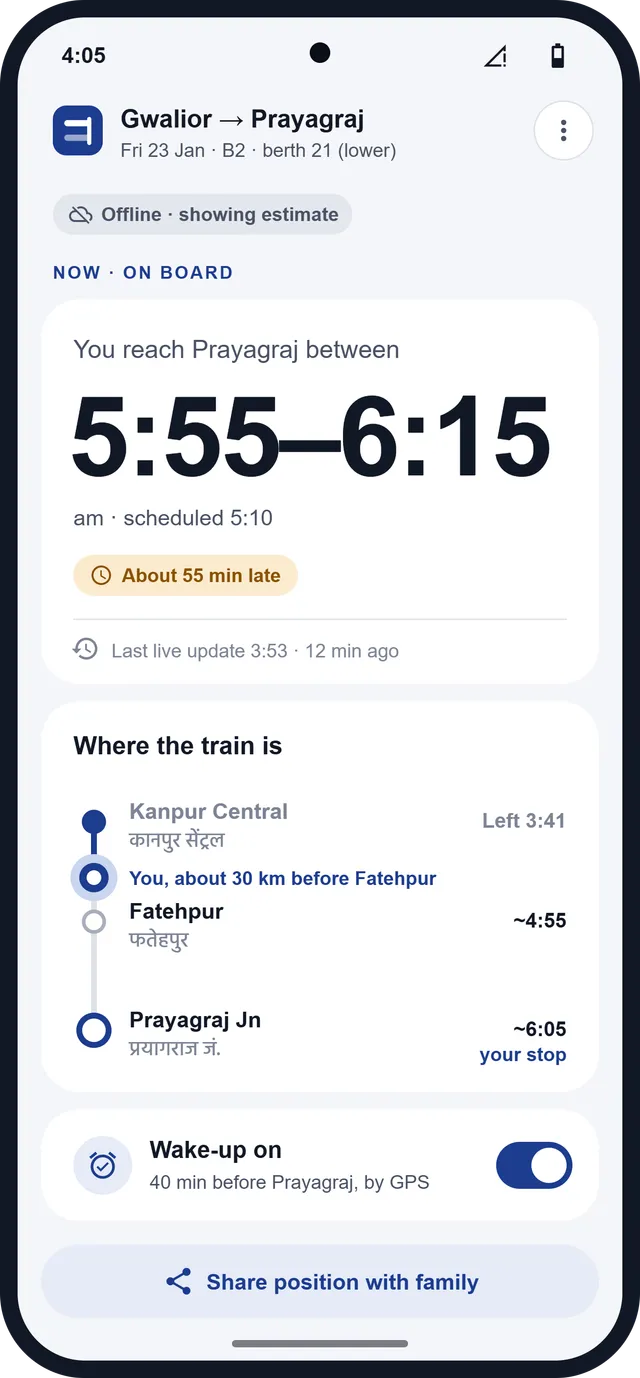
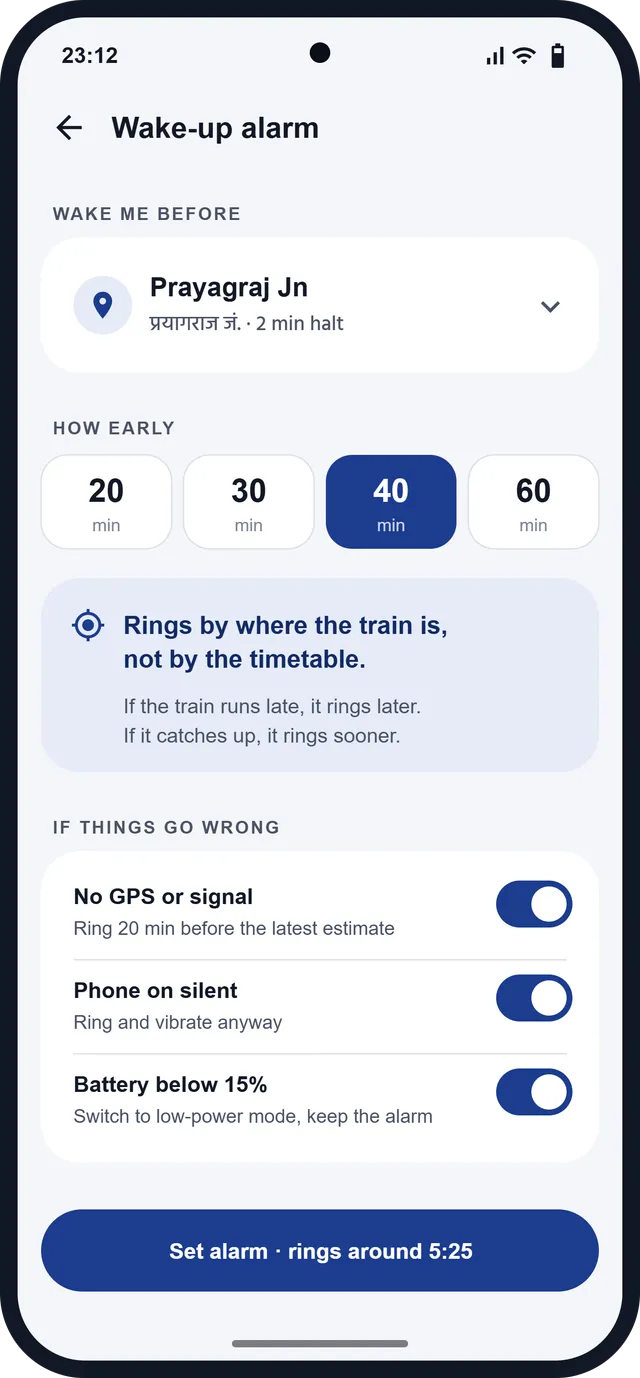
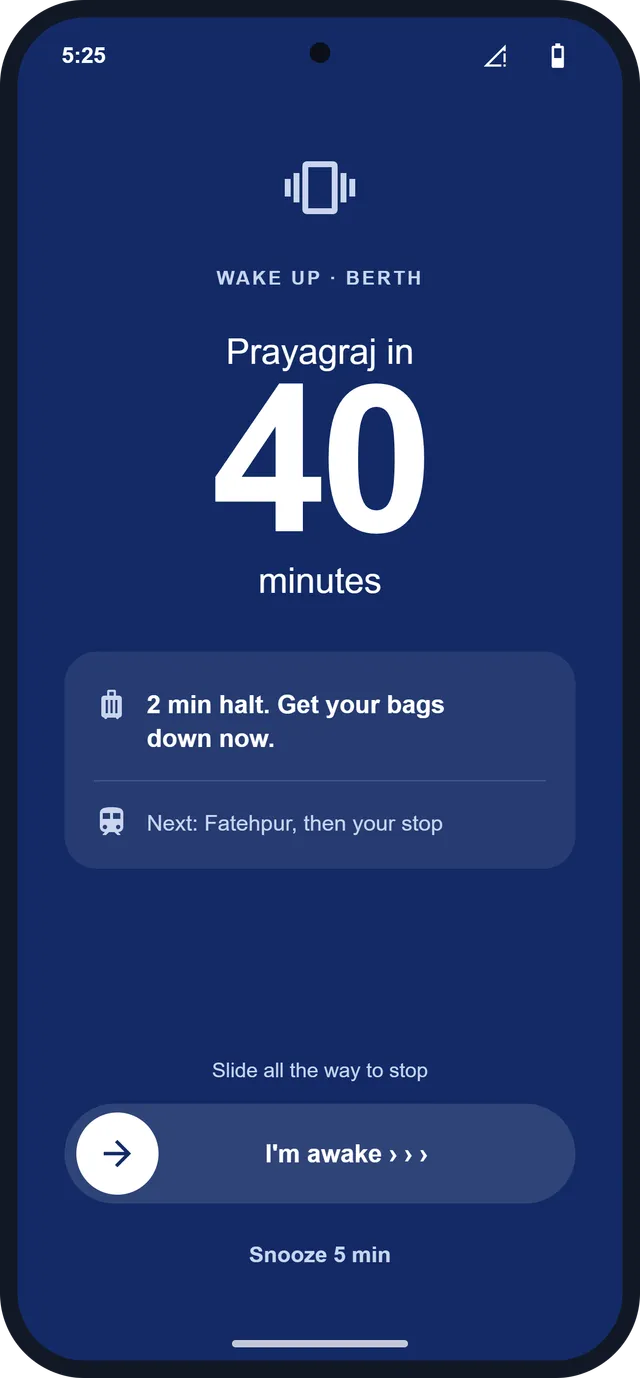
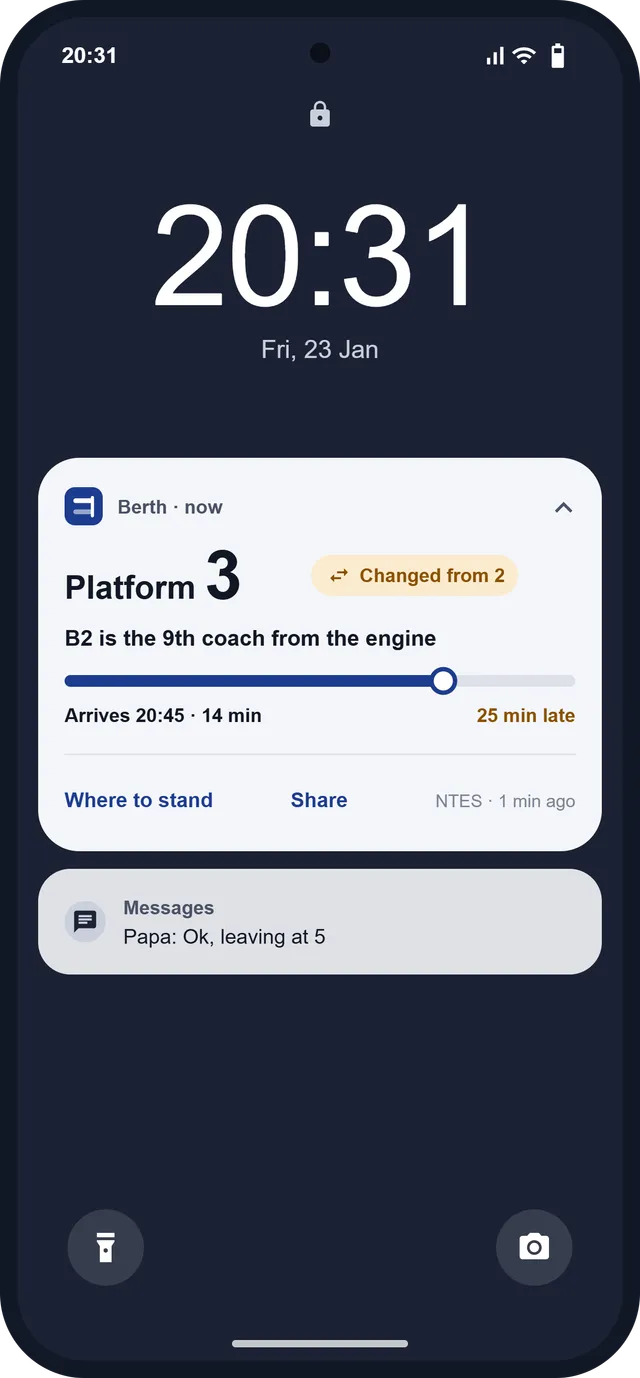
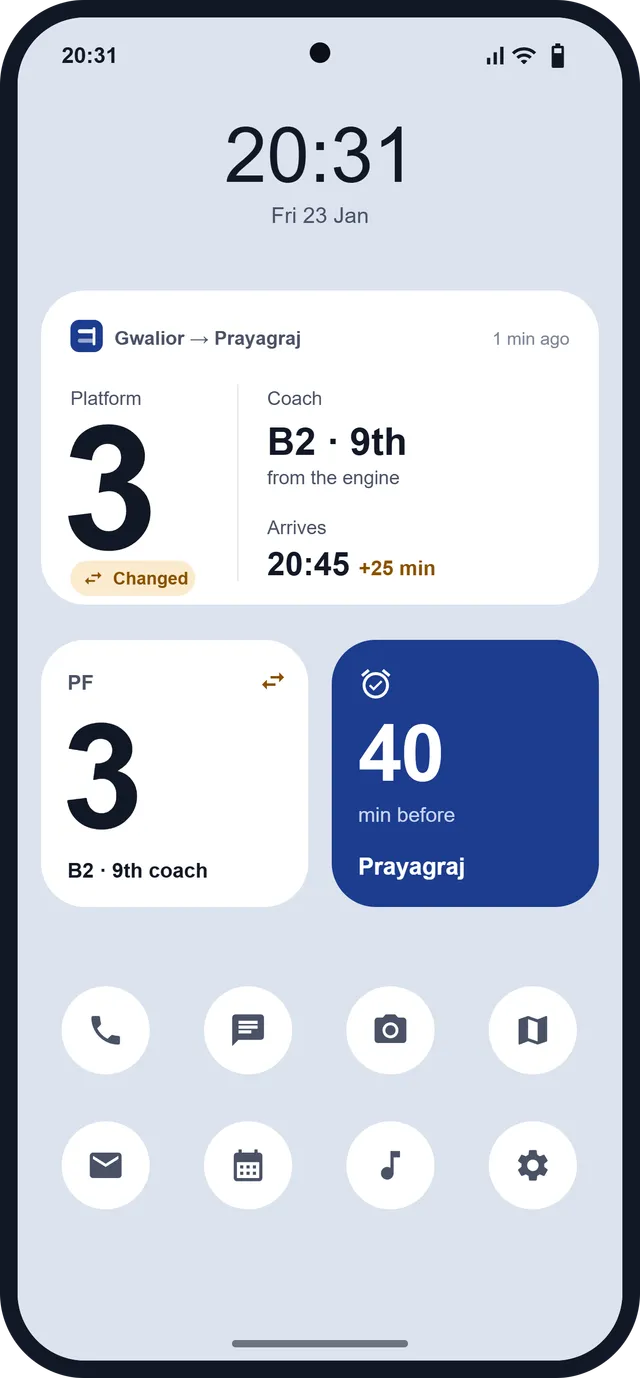
One answer in signage-size type, with its source and age, on the lock screen, a widget and a position-based alarm.
Tell me where to stand. Honestly that’s it.
02How I ran it
Five methods, each checking the others.
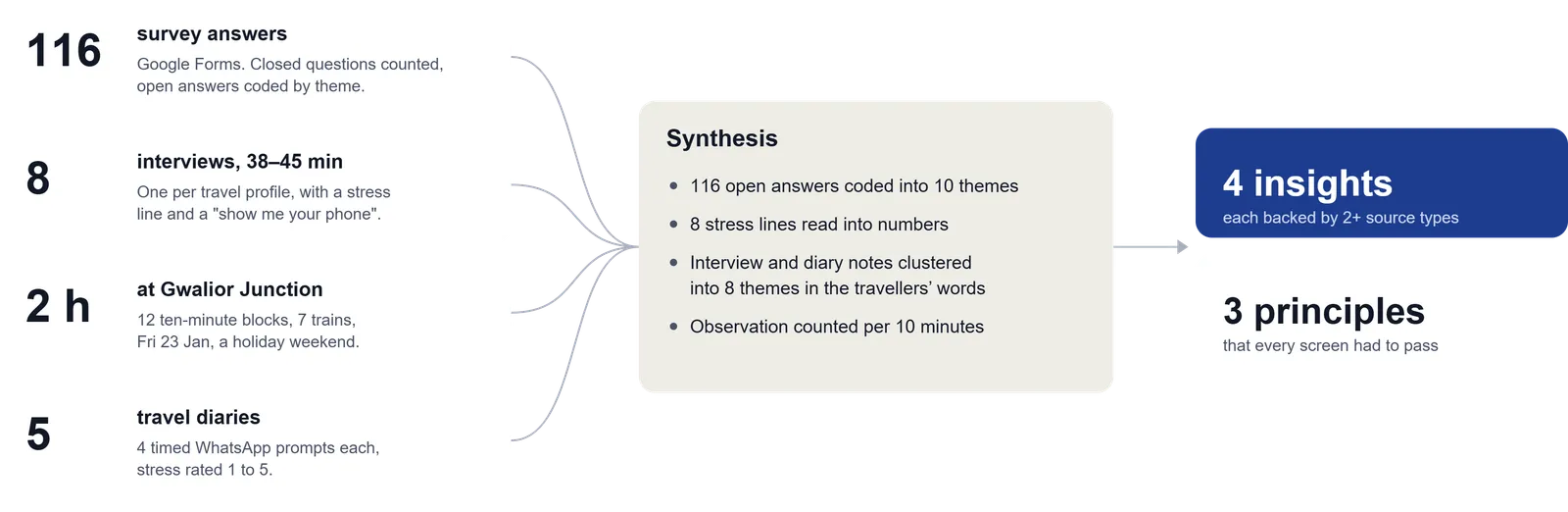
I framed the problem and wrote the plan: the survey, the interview guide, the stress-line exercise, the station protocol and the diary prompts. The responses were simulated with AI from that plan. I then cleaned, coded and analysed them, and every count on this page traces to that dataset.
03Survey · n = 116
70 of 116 check the train’s status six or more times a trip.
Most stressful part of the trip. On board, the phase Berth was briefed for, came last.
04Stress lines
None of the 8 stress lines peaks on board.
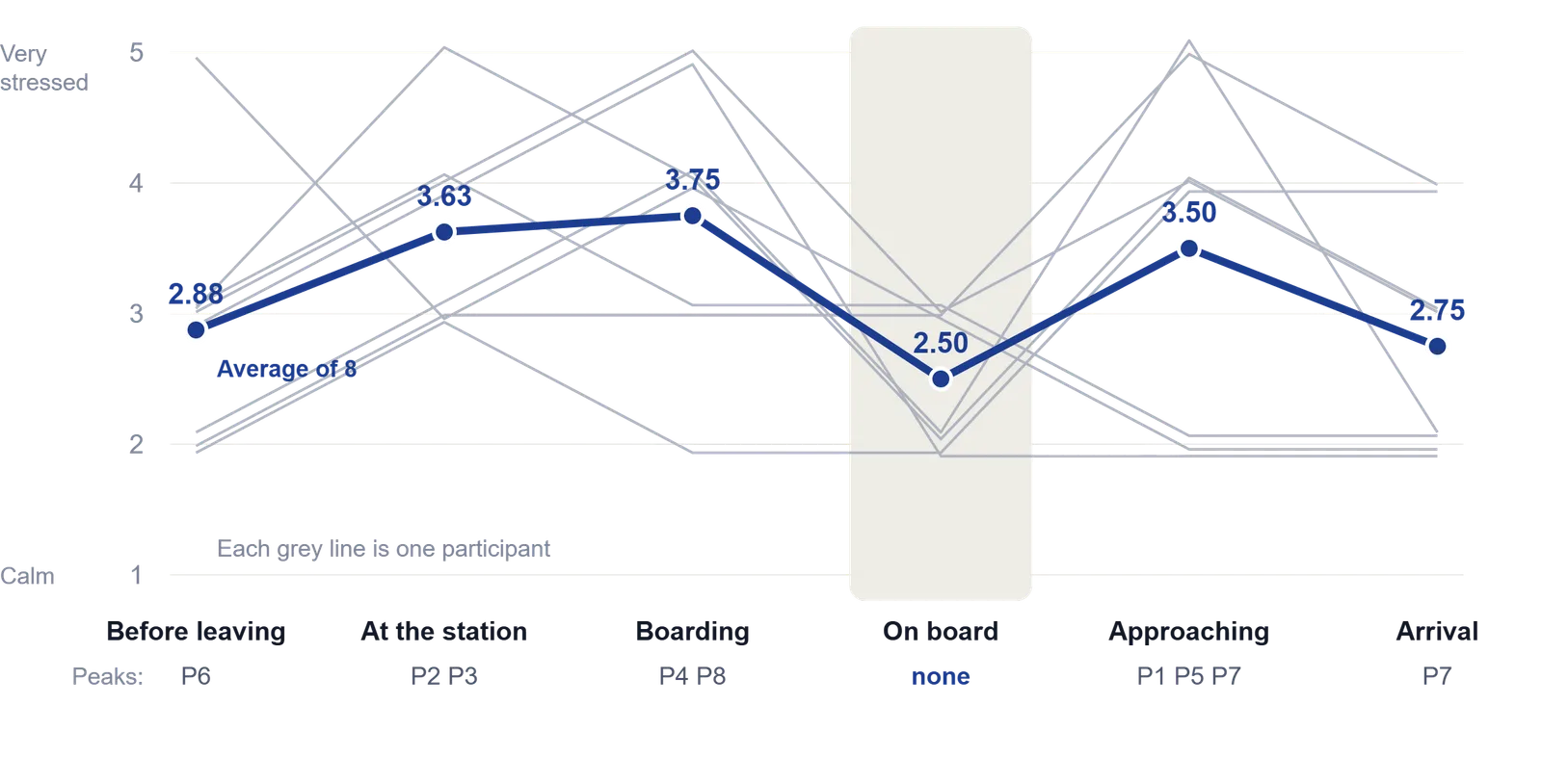
4 of 8 peak at the station or boarding, 3 on the approach, none on board. Both people with a pre-dawn intermediate stop rate the approach a 5. Those whose stop comes in daylight, or is the last one, rate it a 2.
05Station observation
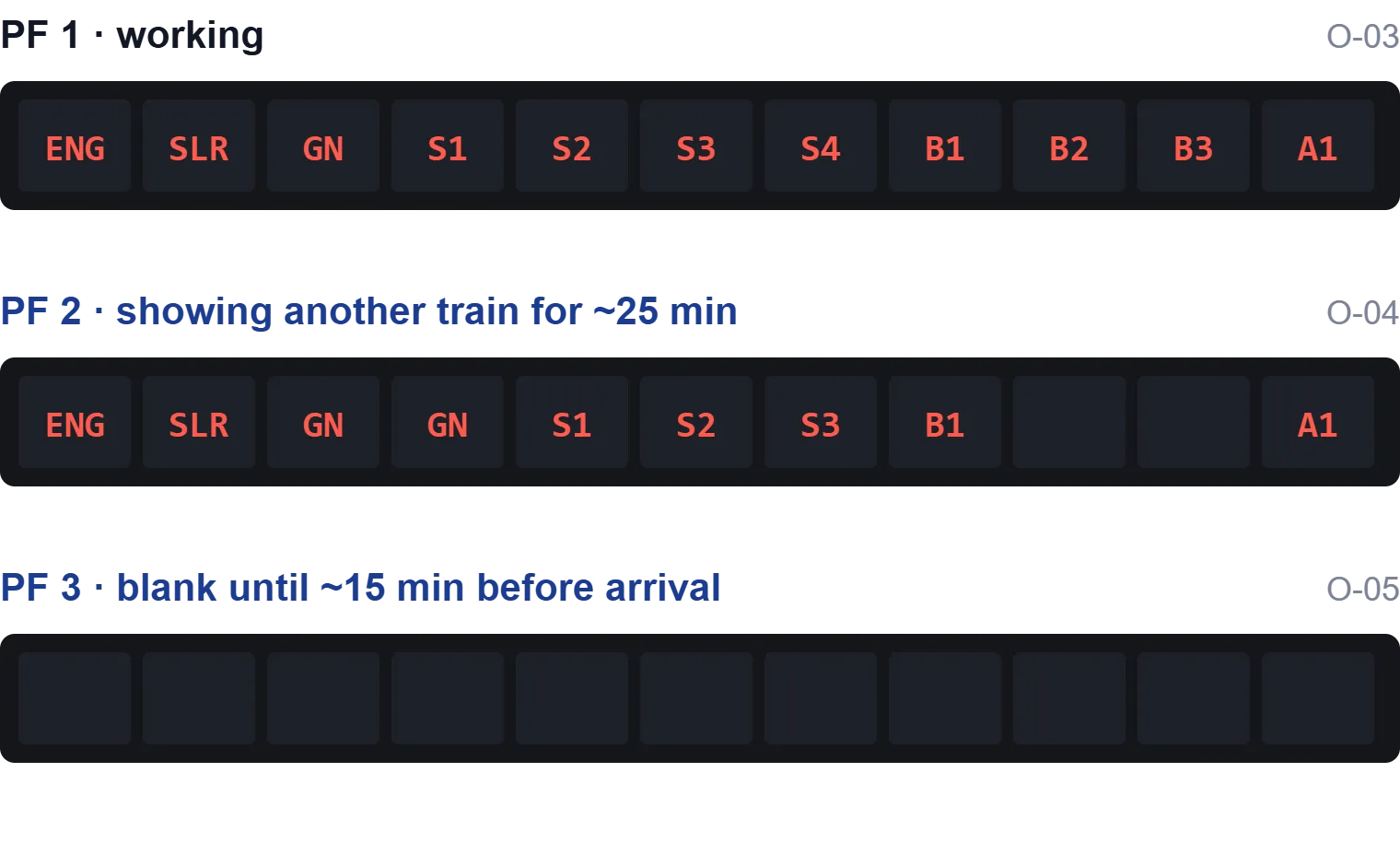
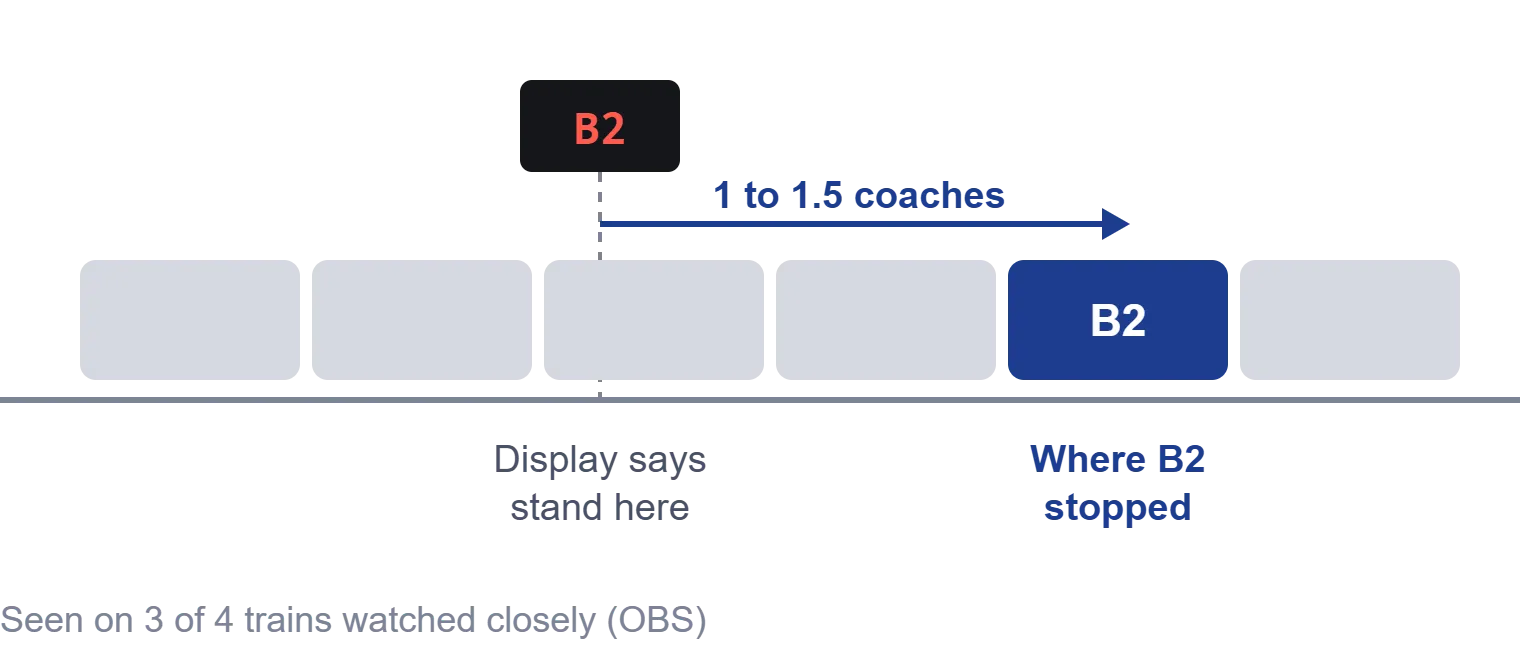
The display shows one place. The coach stops at another.
06What turned out wrong
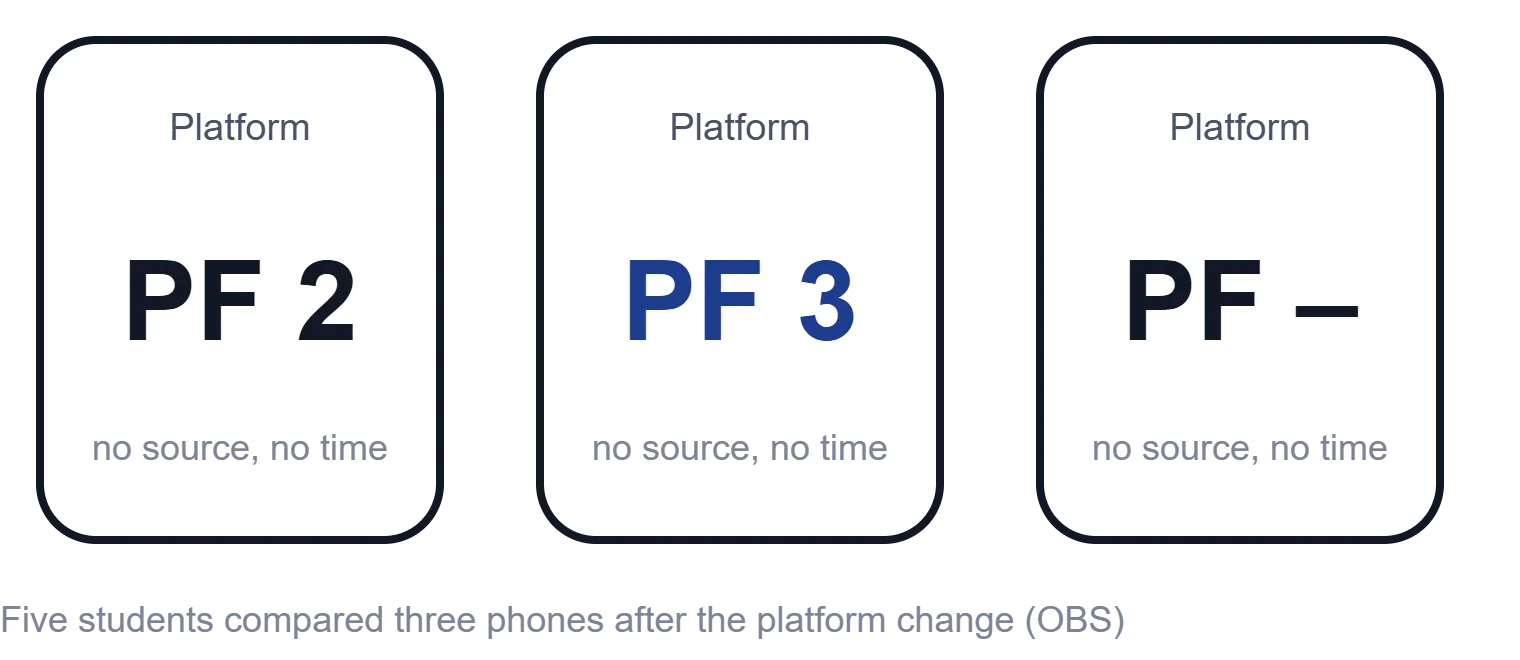
Not missing information. Conflicting, stale information.
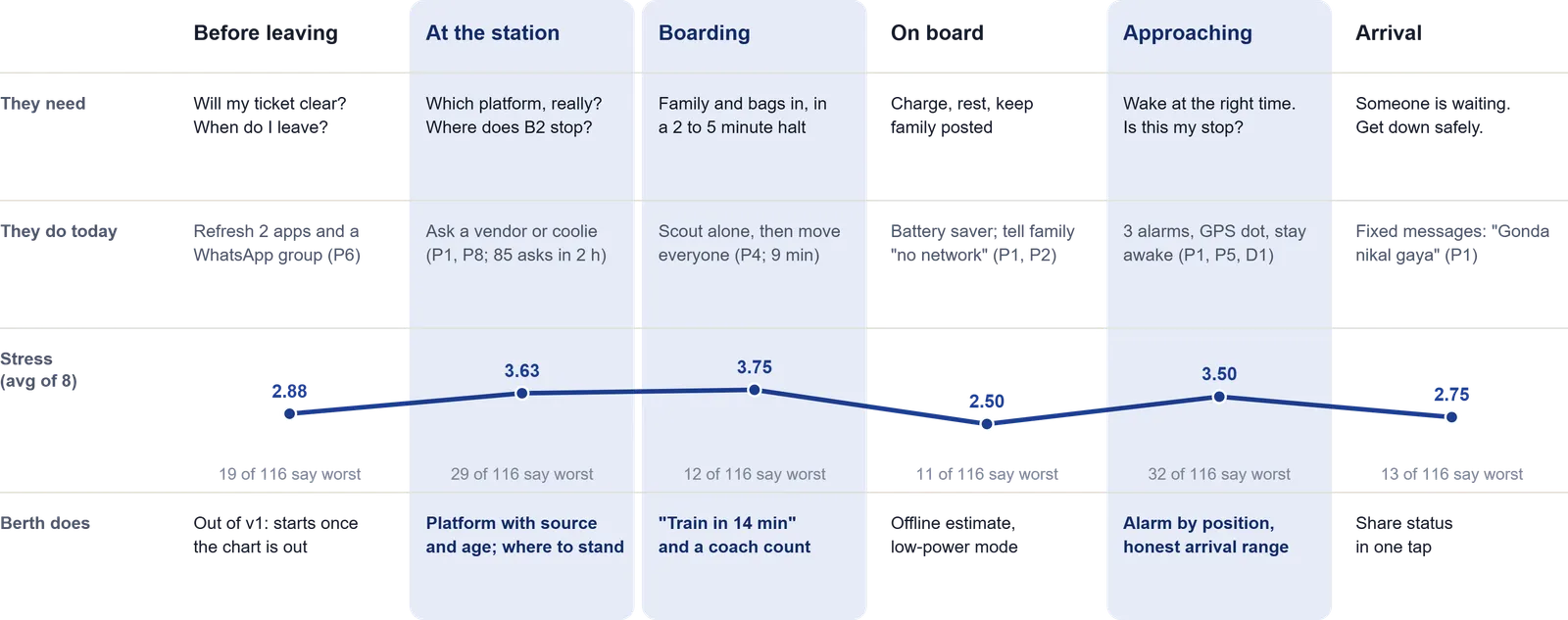
Berth was briefed as an offline-first companion for the long on-board stretch. The research says on board is the calmest phase: average stress 2.50, the lowest, and only 11 of 116 chose it.
The pain sits at the two ends: the platform and the approach to the stop. And the data already exists. It just disagrees across board, app and people, and nothing says which one is current.
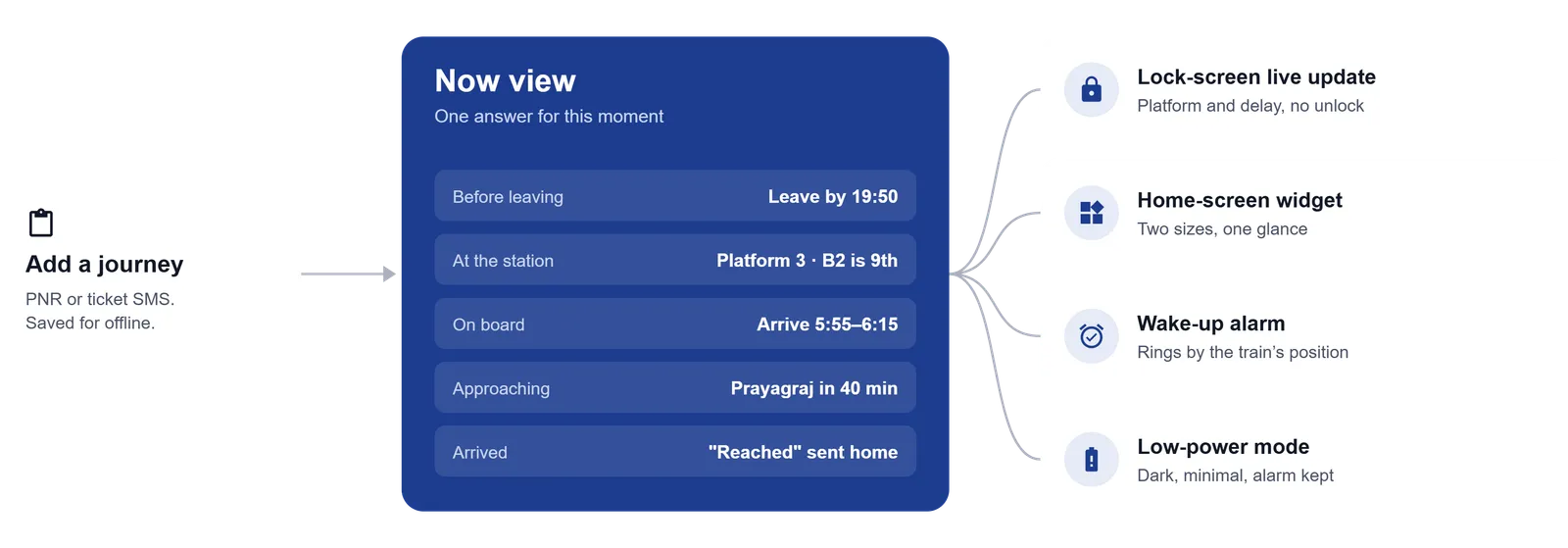
From “a trip tracker” to “the one thing you need right now”.
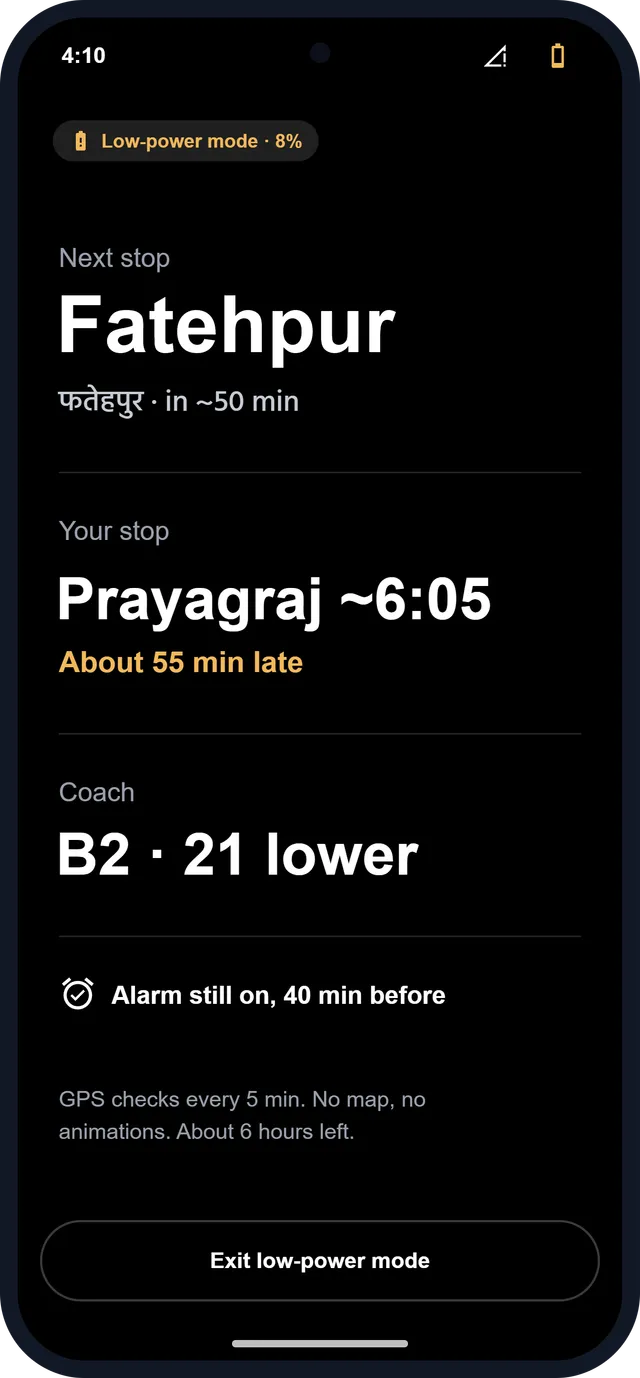
Offline still matters, but at night on the approach, not mid-journey.
07Insights
Four insights, each from two or more sources.
08Design principles
Three rules, then one answer per moment.
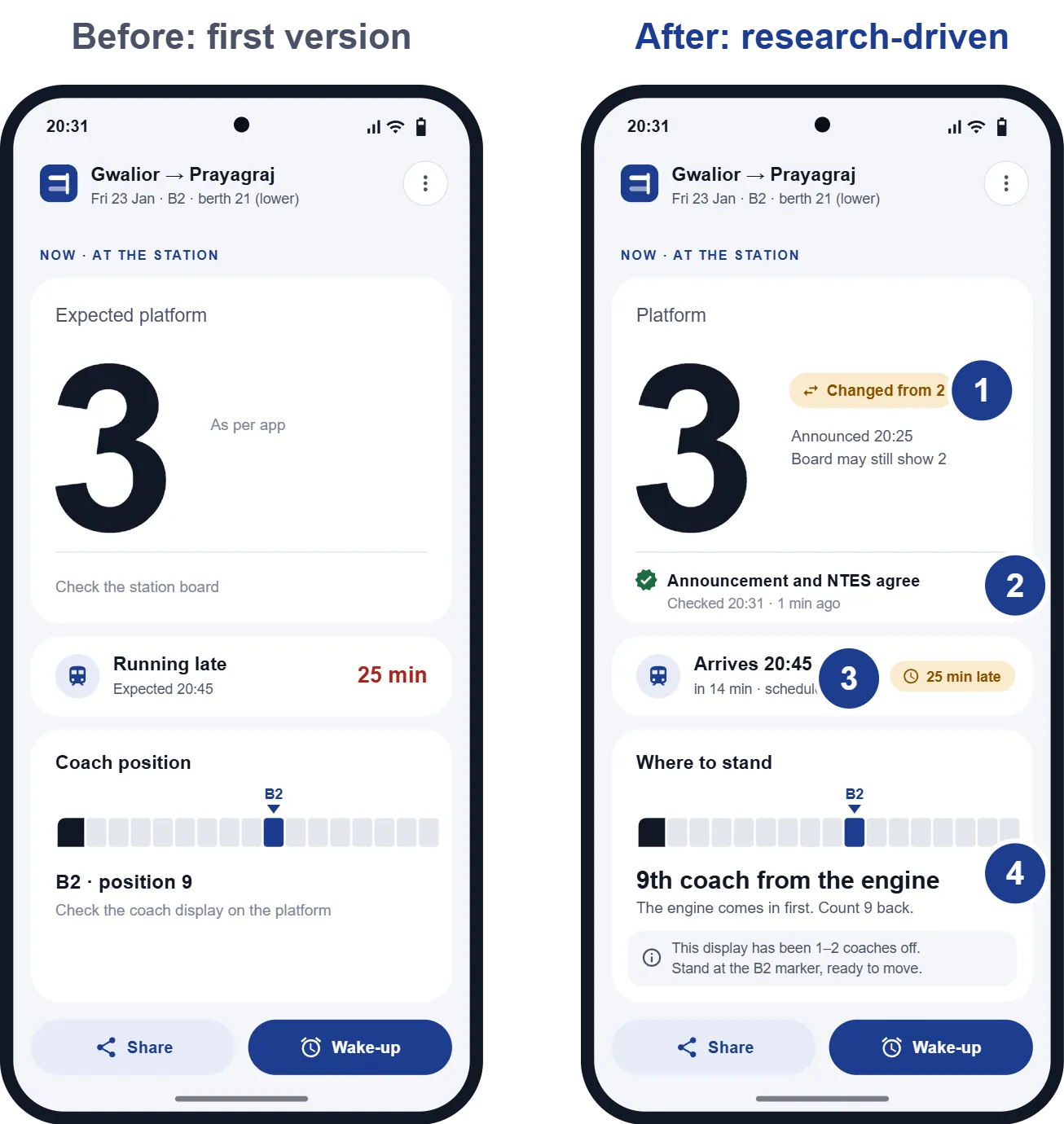
Every number shows its source and its age.
“PF 3 · board and NTES agree · 2 min ago”
Run on the train’s real position, and say it early.
Alarms, ETAs and lead times follow where the train is, shown as an honest range.
Readable at arm’s length, with one hand, in plain words.
Signage-size numbers, no codes without meaning, Hindi station names.
09Final design
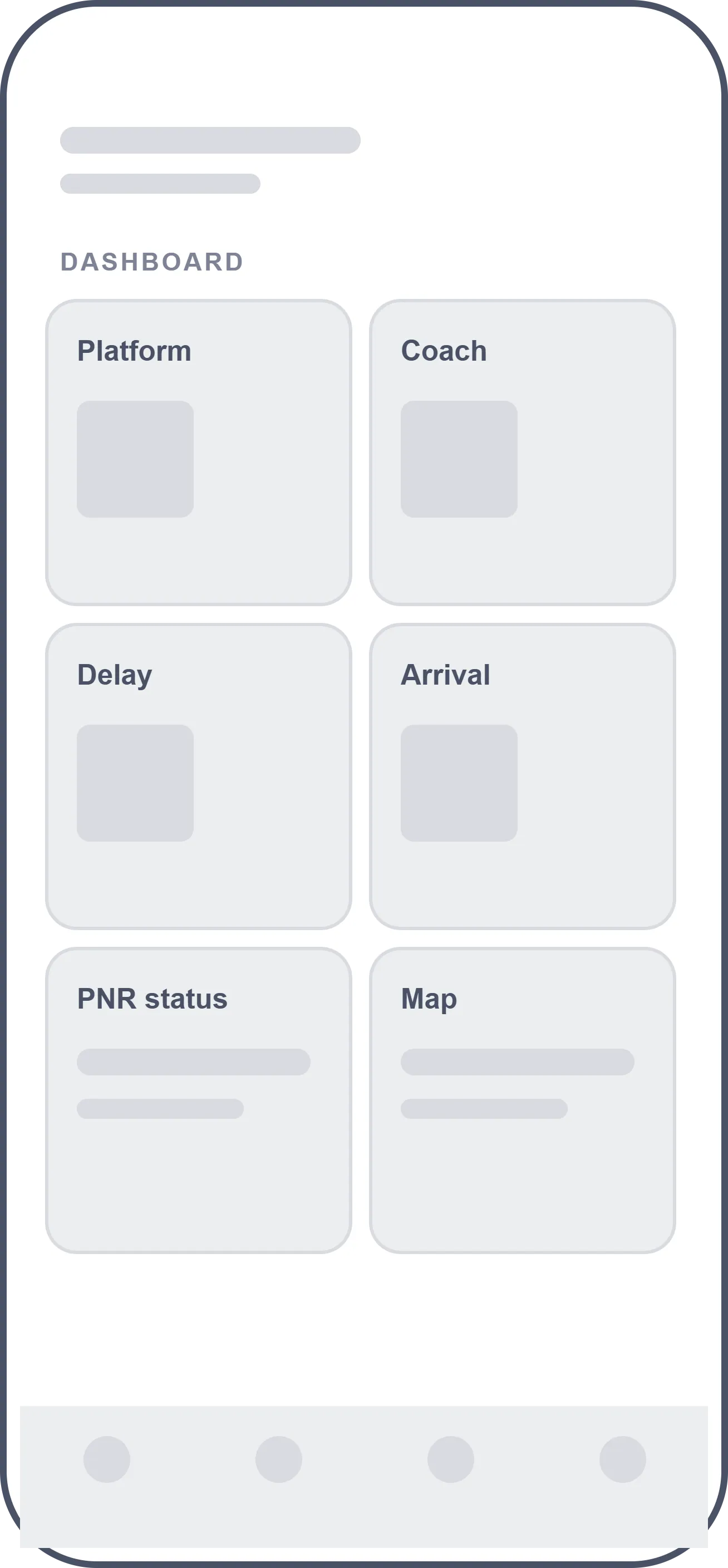
The same answer on every surface you can reach with one hand.
10What I learned
Map stress first. Design for trust. Know where simulation stops.
Map stress before features.
The brief pointed at the calmest part of the trip. Stress lines and the phase question moved the whole product to the two ends.
Design for trust, not just data.
The information existed. What was missing was a reason to believe one number over another: its source and its age.
Simulation has a ceiling.
Simulated responses let me practise the whole pipeline, from plan to coding to design. They can’t surprise me the way real travellers would.
Next folder / T 004
ThriftUp →
Making second-hand fashion feel first-rate, with a buy-back program called ModaCash.